
Peptides Are Reaching More People
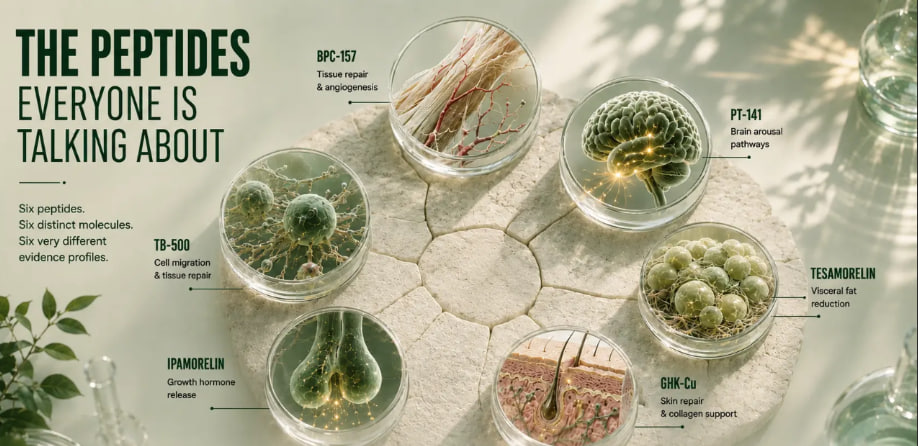
Over the past few years, peptides have moved from niche research into mainstream awareness. BPC-157, TB-500, PT-141, Ipamorelin, Tesamorelin, and GHK-Cu continue to gain attention in fitness, recovery, anti-aging, sexual health, and skin care. As more customers experience their benefits, the future direction of peptides is becoming clearer.
Trend 1: From Single Function to Multi-Scenario Use
Early customers often approached peptides for one specific goal, such as faster recovery or better skin. Today, more customers combine different peptides based on their needs. For example, BPC-157 and TB-500 are often stacked for recovery, Ipamorelin and Tesamorelin for body composition and anti-aging, PT-141 for sexual health, and GHK-Cu for skin repair. Peptides are moving from single-function use to multi-scenario applications.
Trend 2: Customers Want Evidence Plus Experience
When choosing peptides, customers care not only about experience but also about research support. Tesamorelin and PT-141 are FDA-approved with full clinical data; GHK-Cu has multiple controlled human studies; BPC-157 and TB-500 show promise in animal models; Ipamorelin has clear receptor mechanism research. Customers expect real experience backed by reliable evidence.
Trend 3: More Personalized Protocols
Different customers have different goals, and protocols are becoming more personalized. Some focus on athletic recovery, some on body composition, some on sexual health, and some on skin condition. BPC-157, TB-500, PT-141, Ipamorelin, Tesamorelin, and GHK-Cu each target different needs, allowing customers to choose products and usage methods that fit their goals.
Trend 4: Higher Expectations for Quality and Sourcing
As peptides become more popular, customers expect higher quality, purity, and transparency. Reliable supply chains, clear product information, and proper storage are becoming key considerations.
Trend 5: Focus on Long-Term Health Management
More customers are treating peptides not as short-term solutions but as part of long-term health management. BPC-157 and TB-500 support natural repair capacity, Ipamorelin and Tesamorelin support growth hormone and body composition, PT-141 supports sexual health, and GHK-Cu supports skin repair. Together, these products help customers maintain vitality and quality of life.
Shared Advantages and Usage Notes
The shared advantage of these peptides is precision—they can mimic or modulate natural physiological processes. Most require injection because oral use leads to rapid breakdown by digestive enzymes. Their short half-lives mean precise dosing strategies are necessary. Customers should choose based on individual needs and acceptable protocols.
Conclusion
BPC-157, TB-500, PT-141, Ipamorelin, Tesamorelin, and GHK-Cu represent the diverse direction of peptide products. From recovery and body composition to sexual health and skin repair, they offer a wide range of options. As research deepens and customer needs evolve, peptides are likely to play an even bigger role in health management.